
How Ghost Inspector Is Adapting to the Next Era of Web Testing
When an automated website test fails, finding the cause can often take longer than fixing the problem itself. Developers and QA teams typically have to review test results, screenshots, and error messages before they can figure out what needs attention.
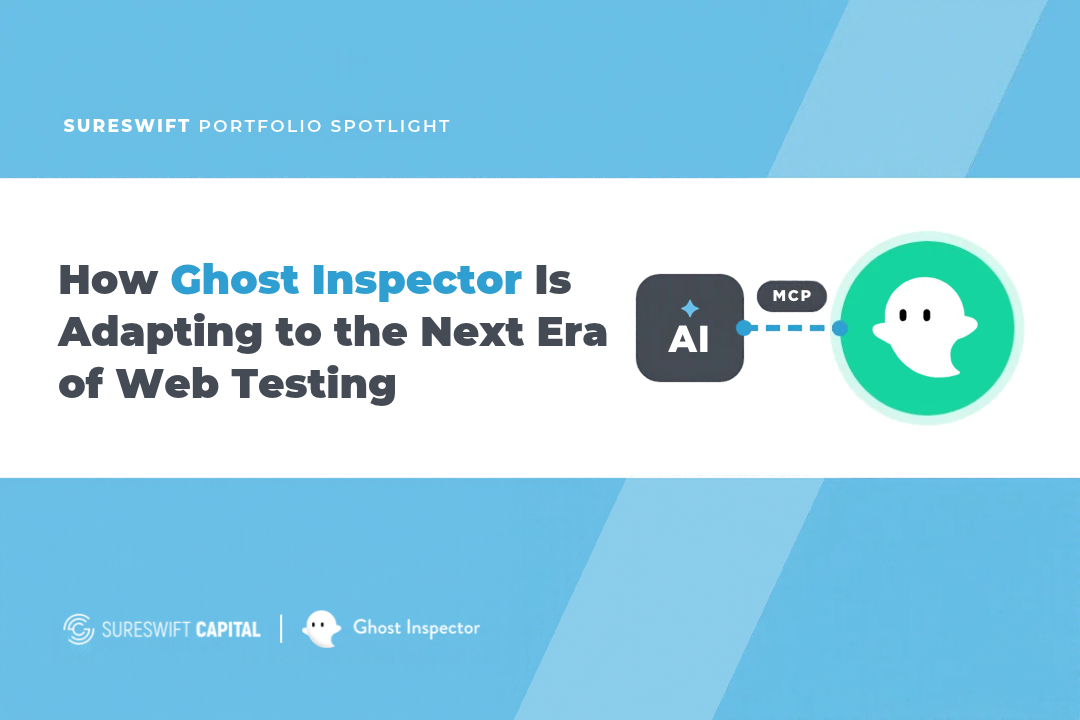
Ghost Inspector, an automated website testing platform, is looking to change that with a new Model Context Protocol (MCP) server. The integration will allow customers to connect their own AI assistants to the automated testing platform, making it possible to investigate failures and update tests through simple prompts.
Simplifying the testing process for users is only part of the team's focus. Ghost Inspector has also expanded its enterprise single sign-on (SSO) capabilities, giving larger organizations more control over how employees access the platform.
To learn more about these developments, we sat down with Nik Gauvreau, Senior AI Developer, and Shardul Shah, Software Engineer and Product Manager at Ghost Inspector. They shared how customer feedback led to these updates, what went into making them happen, and what’s next for the platform.
Let’s get into it!
Table of Contents
- Turning customer feedback into product updates
- Bringing AI into everyday testing workflows
- Expanding SSO to meet enterprise needs
- What comes next
Turning customer feedback into product updates

Customer feedback plays a big role in how Ghost Inspector prioritizes product updates. Shah looks at which features customers request most often, considers the requirements of larger organizations, and works with the engineering team to determine what to tackle next.
One recent example is screen size testing. Customers wanted more control over the dimensions they could use when testing their websites, so Ghost Inspector updated its device presets and introduced custom screen dimensions. Users can now specify the exact width and height they want to test, making it easier to check how their websites perform across different screen sizes.
“I want to make sure that right now we're really hyperfocused on what customers expect and need,” Shah explains.
Some customer requests are more ambitious. Alongside improvements like custom screen dimensions, the team is tackling larger projects that change how customers interact with Ghost Inspector. One of those projects is its MCP server, which opens up new possibilities for using AI in automated testing.
Bringing AI into everyday testing workflows

As AI assistants become more common in software development, customers are looking for ways to use them with the tools they already rely on. For Ghost Inspector, that means finding ways for AI assistants to interact directly with tests, rather than simply offering advice about what to do next.
Gauvreau is leading the development of the MCP server to make that possible.
“AI can handle tasks that would normally require you to navigate the platform and make changes manually,” Gauvreau explains. “With the MCP server, we're giving AI assistants the ability to do that inside Ghost Inspector.”
Ghost Inspector's MCP server allows compatible AI assistants to connect to the platform and perform supported actions on a user's behalf. With this connection, an assistant can find tests, examine results, and make changes based on a user’s instruction. For example, a customer can connect an AI assistant such as Claude Code or Cursor and ask it to run a test, look into a failure, or update a test step. The team has been testing the integration internally ahead of its customer beta.
To help prepare the integration for customers, Shah has been using an AI assistant connected through MCP to investigate technical support issues. In one recent case, a customer’s website failed to load when tested from a particular geolocation, producing a blank screenshot. At first, it looked like something might be wrong with Ghost Inspector, but the AI assistant helped Shah uncover a different explanation.
The assistant examined the test results and HTTP error codes and found evidence that the problem wasn't with Ghost Inspector itself. Instead, the customer's Cloudflare security settings were blocking Ghost Inspector's IP addresses, preventing the website from loading during the test. The assistant recommended adding those addresses to Cloudflare's allowlist, and Shah reviewed the findings before passing the recommendation along to the customer.
"Our AI agent won't draw conclusions without solid evidence," Shah explains. "It requires proof to back up its findings."
This approach allows the team to use AI to investigate problems without relying on its conclusions blindly.
At first, the assistant wasn't particularly good at handling customer issues, Gauvreau admits, but it's improved considerably through this kind of internal testing. Shah played a big part in that progress by regularly giving the assistant support problems he'd already solved, then helping the team correct its mistakes and improve its responses. It's now better at investigating failed tests and recommending solutions, which could eventually save customers time troubleshooting.
Expanding SSO to meet enterprise needs

Alongside its AI developments, Ghost Inspector has expanded its single sign-on (SSO) capabilities to give larger organizations more control over how employees access the platform.
SSO allows employees to log in to Ghost Inspector through their company's usual sign-in system, such as Okta or Microsoft Entra ID. Instead of managing another password, employees can use their company credentials, while their IT department manages access through a central system.
Ghost Inspector had supported basic SSO for years, but a request from one of its largest enterprise customers prompted the team to expand its security capabilities.
“Simply allowing employees to log in with their Okta credentials wasn’t enough anymore,” Shah explains. “The customer wanted stronger security controls, including audit logs and IP allowlisting.”
One important improvement was the addition of System for Cross-domain Identity Management (SCIM), which allows companies to manage Ghost Inspector accounts through their central identity system. Gauvreau notes that administrators previously had to manage these accounts separately. With SCIM, accounts can be created automatically when employees join a company and access can be removed when they leave.
Other improvements include support for multi-factor authentication through an organization's identity provider, multiple company domains, and guest access controls for outside collaborators. Administrators can also review audit logs and restrict access to approved IP addresses, giving them more oversight of account activity.
What comes next
Ghost Inspector's next priority is to bring the MCP integration to customers and learn how they use it. The team is preparing for a closed beta, giving customers an opportunity to try the MCP integration with their own AI assistants.
The team is also experimenting with an AI assistant inside Ghost Inspector. Unlike the MCP server, which connects the platform to external AI tools, this assistant would let customers create and update tests through a chat interface without leaving Ghost Inspector. Gauvreau sees even more potential for the assistant as development continues.
“The goal is for the AI assistant to not only create tests for customers, but also browse their websites and figure out what tests they should be creating in the first place,” he explains.
Alongside the AI assistant, the team is internally testing an experimental version of Ghost Inspector that will eventually give customers early access to new features. The experimental environment connects to production data, allowing the team to test changes under realistic conditions before making them available to users. Developers review proposed changes, and features still undergo quality assurance testing before reaching the main platform. The team plans to make the experimental version available to customers, although a release date hasn't been set.
As customers begin trying the MCP integration and other new features, their feedback will help the team understand what works well and where improvements are needed. For Gauvreau and Shah, it's another opportunity to learn directly from the people using Ghost Inspector and put those insights into future updates.
To see what Ghost Inspector can do for your team, explore the platform or visit the documentation to learn more about its features and integrations.

Sarah is an NYC-based business, technology, and arts writer who specializes in B2B writing for thriving SaaS tech apps. You can view her portfolio here.
Related articles


When Automation Breaks, Support is the Product: Docparser on Delivering the “Best Customer Support”
In automation tools, reliability depends on more than the product itself. Learn how Docparser earned recognition for Best Customer Support by keeping complex workflows running reliably.
