
Why Human-Generated Content Is More Valuable Than Ever (And What Brands Should Do About It)
.png)
There's a paradox at the centre of the AI conversation that isn’t getting enough attention. The same technology that makes it easier to produce large volumes of content is also making that content less valuable. The more teams lean on AI to fill their feeds, the more the internet fills up with homogenous material, identical in tone, format, and verbiage. At the same time, that flood of sameness has made one of the oldest forms of influence more powerful than ever: a recommendation from someone you trust.
Lacey Shearwill, General Manager of LeadDyno, has watched this play out in real time. She came to the position from a background in marketing, so she's been on both sides of this shift: producing content and watching how audiences respond to it.
"Human-generated content is becoming more and more valuable," she explains. "AI needs new content to share and source. If we only produce AI content, eventually it'll all be the same."
It's the proverbial snake eating its own tail, and it’s already posing a problem for brands trying to get noticed. Fortunately, there's one kind of marketing that hasn’t experienced devaluation like other more traditional forms have. Thanks to the influx of AI, affiliate marketing has only grown in its effectiveness.
Today, we sit down with Shearwill to discuss the AI era of online content and its impact on affiliate and influencer marketing. We'll hear about how AI is shifting marketing strategies in 2026, what the strongest brands are doing to foster trust and gain attention, and how LeadDyno is helping brands solve this new problem with affiliate marketing.
Table of Contents
- More content, less trust
- A marketing channel with a worthy ROI
- How LeadDyno helps brands find and cultivate quality affiliate partnerships
- Practical tips for using AI well in your affiliate program
- What the best affiliate programs do differently
- Conclusion
More content, less trust
For a long time, producing content consistently was a major advantage. Brands that showed up regularly across channels were likely to earn more attention over time.
Now, thanks to AI, teams can pump out posts and ads in quick succession, and many do. This has led to a packed content environment, where much of the material being put out is trained on the same inputs, optimized for the same outputs, and increasingly difficult to individuate. The challenge for brands has shifted from creating enough content to creating the kind of content that audiences trust and care about.
According to Shearwill, there’s a new thread of skepticism that runs through comment sections today. More and more, people are asking whether what they're looking at was made by AI. With so many questioning whether what they see online is legitimate, there’s new value placed on being a trustworthy, real source.
“People will skip ads, but they follow creators and friends," she explains. "If they see content from someone they know and trust, that's where they're going to be truly influenced.”
So how can businesses take advantage of this new lens? That’s where affiliate marketing comes in. When someone promotes a product to a community whose trust they’ve already earned, the reception is completely different.
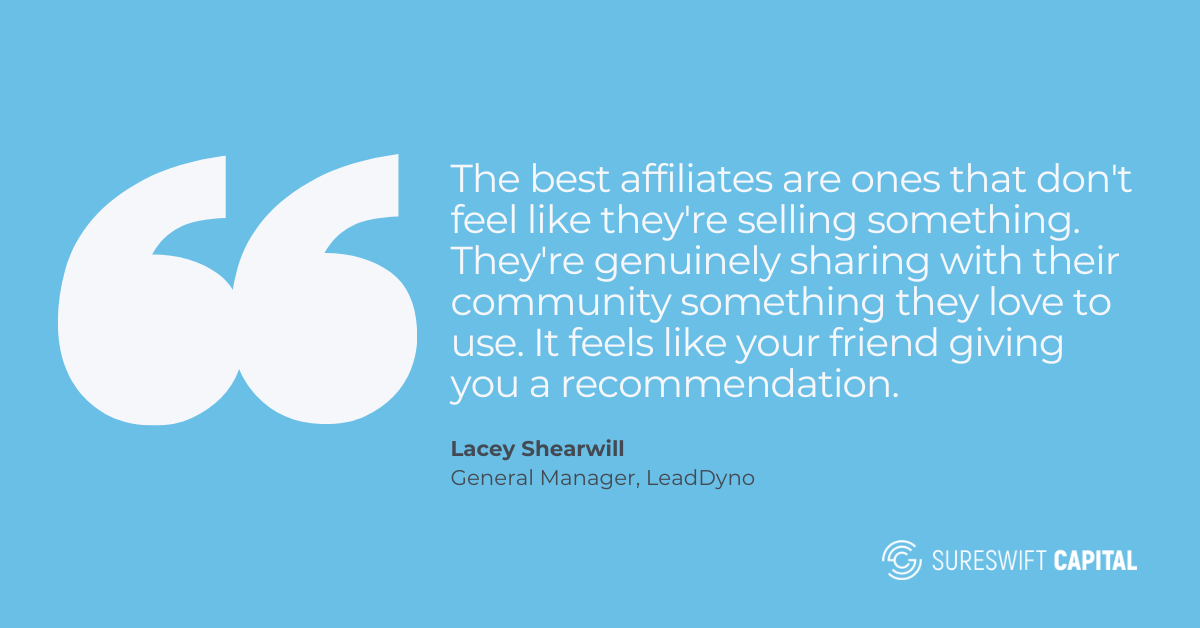
Word of mouth has always been the most effective form of marketing. With affiliate programs, businesses can create a strategic word-of-mouth system and track it all the way.
A marketing channel with a worthy ROI
With paid acquisition growing more crowded and organic reach shrinking across most platforms, brands need marketing channels that have a faithful audience ready and waiting. Affiliate marketing is one of the few that does.
"Affiliates already have their communities," she says. "They already have that trust factor. They're already tapped into that particular niche. That's why it's such a great way to market — it's the perfect distribution channel already built in."
There's also a practical appeal that becomes more compelling when marketing budgets are under pressure. With paid advertising, brands pay for impressions and clicks regardless of what happens next. With affiliate marketing, a sale gets made and then the affiliate gets paid. You only spend when something converts.
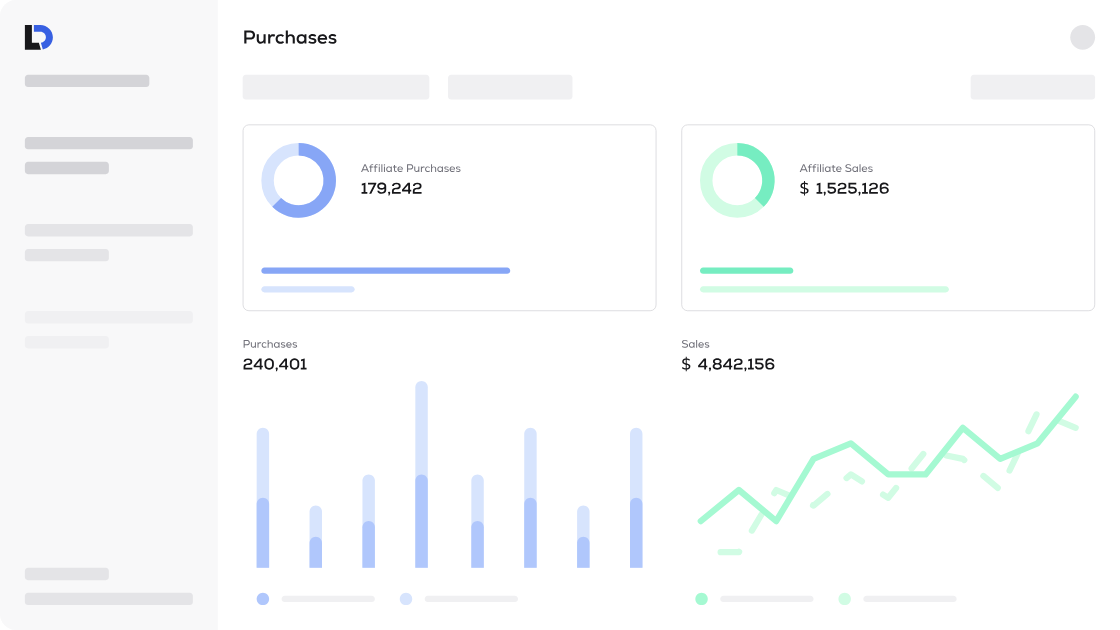
"It’s very measurable," Shearwill notes. "You can see exactly how many sales were generated by your affiliates. There's a direct payoff that you don't see in other forms of marketing."
For some of the teams she works with at LeadDyno, that’s been the deciding factor. Affiliate marketing has become their primary paid channel, with traditional digital advertising taking a back seat or disappearing from the budget altogether. When every dollar is accountable, a channel where you pay only on a completed sale is a hard one to argue with, which is why so many brands turn to LeadDyno to run one.
How LeadDyno helps brands find and cultivate quality affiliate partnerships
Tracking has to be accurate. Payouts have to be timely and reliable. Relationships with affiliates must be actively maintained. And as AI-generated content proliferates, brands need to be more careful than ever about who's representing them and how.
LeadDyno handles the infrastructure, giving teams a single dashboard where they can manage the full lifecycle of an affiliate program: from the moment a potential affiliate applies, through every sale they make, to their final payouts.
1. A price structure designed for growth
Back in 2023, LeadDyno’s pricing was redesigned to address something Shearwill describes as penalizing success. With per-website visit or per-affiliate pricing models, the cost of running a program goes up in proportion to how well it's performing. LeadDyno's flat-rate monthly fee means brands aren't disincentivized from growing.
2. Robust fraud prevention
Protecting the integrity of a program matters, especially as fake accounts and AI-generated personas become more common. LeadDyno includes a dedicated set of fraud prevention tools:
- Manual affiliate approval: Brands review every application before granting access. LeadDyno also blocks temporary email addresses commonly used by spammers.
- Custom signup fields: Brands can require affiliates to provide specific information on the signup form, such as their Instagram handle, to confirm they have a legitimate presence before being admitted.
- Spam account blocking: Problematic affiliates can be archived, removing them from stats, communications, and system visibility entirely.
- Self-commission prevention: The platform blocks affiliates from earning commissions on their own purchases.
- Search engine controls: Brands can fully hide their affiliate signup forms from Google and other search engines, preventing unwanted spam signups.
Shearwill's advice to every new client is the same: don't auto-approve. “I would suggest that everyone who works with us absolutely does not automatically approve affiliate applicants,” she says. ”You want to take a closer look and make sure that each affiliate is a great fit for your brand.” When it comes to choosing strong affiliates, she offers a clear starting point. “The best place to start is your existing happy customers. They’re the ones who will make your best affiliates.”
3. Versatile commission and payment options
Thanks to its advanced payout features, LeadDyno can easily adapt to a business’s specific needs through:
- Customizable commission structures: Brands can set percentage or flat-rate commissions, create tiered performance rewards, run time-boxed promotions, and configure separate plans for different affiliate groups. SaaS businesses can offer recurring commissions for subscribers referred by affiliates.
- Flexible payouts: Brands choose their own payout frequency and minimum payment threshold, with options for PayPal mass pay, individual payments, or alternatives like gift cards or store credit.
- REST API and developer access: For teams that need custom configurations, LeadDyno's REST API allows developers to connect the platform to existing systems.
- Custom reporting: Standard reports cover visitors, leads, purchases, and affiliate performance. For teams that need different data points or formats, LeadDyno’s support team can help configure.
4. Customer service and feature development
Every LeadDyno client has a dedicated point of contact from initial setup through configuration calls and ongoing check-ins, with the option to hop on a video call when something comes up. It's a level of access that's hard to find in larger software companies, where development cycles are long and individual client requests tend to get lost.
At LeadDyno, feature requests move fast. Shearwill describes a recent example: a client wanted to change how links appeared in emails sent to their affiliates. It went live two weeks later.
"You'd never think that in two weeks a feature request would exist," she says. "But we can do that."
When she joined the company, the pace of product development surprised her. "It blew me away how much development and product tweaking we're constantly doing for our customers," she says. "These small things make a big difference to people."
Custom reporting works the same way. Most clients use the standard reporting screens, which cover visitors, leads, purchases, and affiliate performance in detail. For clients who need different data points, the team will configure it with them.
And while they have AI that might help with an initial chat, “we absolutely have true humans replying and helping," Shearwill notes. "You'll have a point of contact who is a real person that’s available to hop on a video call."
Practical tips for using AI well in your affiliate program
AI can still play a practical role in running a successful affiliate program. Here's where Shearwill advises it can make the most difference.
- Finding potential affiliates. It used to take considerable time to identify who in a given niche is already promoting competitor products, or who among a brand's existing customers might be a good fit. AI can speed that up.
- Commission research. Staying competitive with what other brands are offering their affiliates requires ongoing research. AI can make this process faster by helping with structural modeling: mapping out tiered commission plans, flagging any numbers that might be off, and presenting options in a reader-friendly format.
- Affiliate communications. Keeping affiliates engaged requires regular outreach: email updates, promotional materials, announcements about new products. AI can help generate drafts and frameworks.
"AI can help you build a foundation and generate ideas," Shearwill says, "but then you need to go in and put your human touch on it, your own voice.”
Shearwill encourages brands to treat AI output as a starting point rather than a finished product. Releasing content that reads as generated tells audiences that the brand isn't investing in real communication. "Take the time to rewrite things in your own voice," she says.
There's also a subtler risk she flags: using AI for strategic brainstorming without accounting for the fact that it tends to validate whatever it's given. "AI is going to encourage every idea you have," she comments, "and not every idea we have is a good one. You have to make sure you're still looking at things through a critical eye."
What the best affiliate programs do differently

According to Shearwill, the top-performing affiliate programs share a few patterns, with most of them returning to the same idea: treat affiliates like partners. Here’s what she says they consistently get right:
Tiered rewards that incentivize top performers. Higher commissions, milestone bonuses, or performance-based tiers that reset monthly all serve the same purpose: making it worth an affiliate's time to keep pushing.
Early product access. Getting top affiliates familiar with a new product before it's available to the public means they're ready to promote it on launch day, and it tells them they matter to the brand.
Exclusive affiliate communities. A private Facebook group or dedicated communication channel makes high-performing partners feel like they're part of something unique and exclusive.
Getting affiliates to use the product. Free trials, extended access, and sample products are worthwhile investments. “Especially in the SaaS space, it’s really clear when someone hasn't genuinely used what they're promoting,” she says. “You can tell.”
Paying out on a regular cadence. Setting the payout threshold too high means affiliates can go a long time without seeing any return. "They might even forget they've sold for you," she says. Regular payouts keep the relationship active.
Staying in touch without overdoing it. Going dormant is a mistake, but so is spamming. The brands doing this well find a cadence that keeps affiliates informed and engaged.
Running through it all is a value that Shearwill keeps returning to: authenticity. The brands with the strongest programs are the same with their customers as they are with their affiliates, and the same in public as they are behind the scenes.
"Quality in affiliate marketing absolutely beats out quantity anytime," she says. That applies to the affiliates a brand recruits, the content those affiliates produce, and the relationship a brand builds with the people out there recommending their product.
In a content environment where more and more of what people encounter was made by a machine, that's worth a lot.
Conclusion
The irony of the AI content era is that the more it produces, the more valuable human voices become. When brands rely solely on AI-generated material, it can hurt their reach and damage trust with their audiences.
Affiliate marketing speaks to what today’s audiences respond to: a real person with a cultivated community recommending something they truly believe in. In a feed full of generated content, that's worth more than it's ever been. And with the right program behind it, it's also one of the most measurable bets a brand can make.
For more on how SureSwift Capital's portfolio companies are building for long-term growth, explore our Portfolio Spotlight series.

Related articles
.png)
.png)
.png)
When Automation Breaks, Support is the Product: Docparser on Delivering the “Best Customer Support”
In automation tools, reliability depends on more than the product itself. Learn how Docparser earned recognition for Best Customer Support by keeping complex workflows running reliably.
